Property, Support & Settlement
Is California a Community Property State?
Quick answer
Yes, California is a community property state. Under California Family Code §760, any property or debt acquired during the marriage is generally considered community property and must be divided equally (50/50) in a divorce, regardless of whose name is on the title or who earned the income.
If you are getting divorced in California, the single most important legal concept you need to understand is community property. It dictates who gets the house, who gets the retirement accounts, and who is stuck paying the credit card bills.
California is one of only nine community property states in the U.S. The rules here are strict, but they are also predictable. The same 50/50 framework also governs how to split debt in a California divorce.
Here is exactly how community property works in a California divorce, what counts as separate property, and how to divide your assets without going to trial.
What Does "Community Property" Actually Mean?
In California, marriage is legally treated like a business partnership. When the partnership ends, the assets and debts of the business are split evenly down the middle.
Under California Family Code Section 760, all property — real or personal, wherever situated — acquired by a married person during the marriage while domiciled in this state is community property.
This means it does not matter if:
- Only one spouse worked outside the home
- A car is registered only in the husband's name
- The credit card debt was racked up entirely by the wife
- The retirement account was funded by only one spouse's paycheck
If it was earned, bought, or borrowed during the marriage, it belongs to both of you equally. You each own a 50% interest in the assets, and you are each responsible for 50% of the debts.
Community Property vs. Separate Property
The first step in dividing assets in a California divorce is characterizing them. Every asset and debt falls into one of two buckets.
What is Community Property?
Community property includes everything acquired between the date of marriage and the date of separation. Common examples include:
- Income earned by either spouse during the marriage
- Houses or land bought during the marriage
- Vehicles purchased during the marriage
- 401(k) contributions and pension benefits earned during the marriage
- Credit card debt accumulated during the marriage
- Mortgages and auto loans taken out during the marriage
What is Separate Property?
Separate property belongs entirely to one spouse. The other spouse has no legal claim to it. Under California Family Code Section 770, separate property includes:
- Anything you owned before you got married
- Anything you earned or acquired after your date of separation
- Gifts given specifically to one spouse, even during the marriage
- Inheritances received by one spouse, even during the marriage
- Rents, issues, and profits derived from separate property
The Date of Separation Matters
Because community property is defined by the timeframe of the marriage, the exact date your marriage ended is a critical financial detail.
In California, the "date of separation" is the day that one spouse decided the marriage was over and communicated that decision through their actions. It is not necessarily the day you moved into separate houses, and it is definitely not the day the divorce is finalized.
Once the date of separation hits, the community property clock stops. If you get a bonus at work the day after you separate, that bonus is your separate property. If your spouse takes out a $10,000 loan the day after you separate, that is their separate debt.
The Commingling Trap
The biggest mistake couples make is "commingling" their separate property with community property.
If you inherit $50,000 from your grandfather (separate property) and deposit it into a joint checking account where both spouses deposit their paychecks (community property), that money becomes commingled. If you later use money from that account to buy a car, it becomes very difficult to prove which dollars were used.
In California, if you cannot trace an asset back to a separate property source with clear financial records, the court will presume it is community property.
How to Divide Property Without a Judge
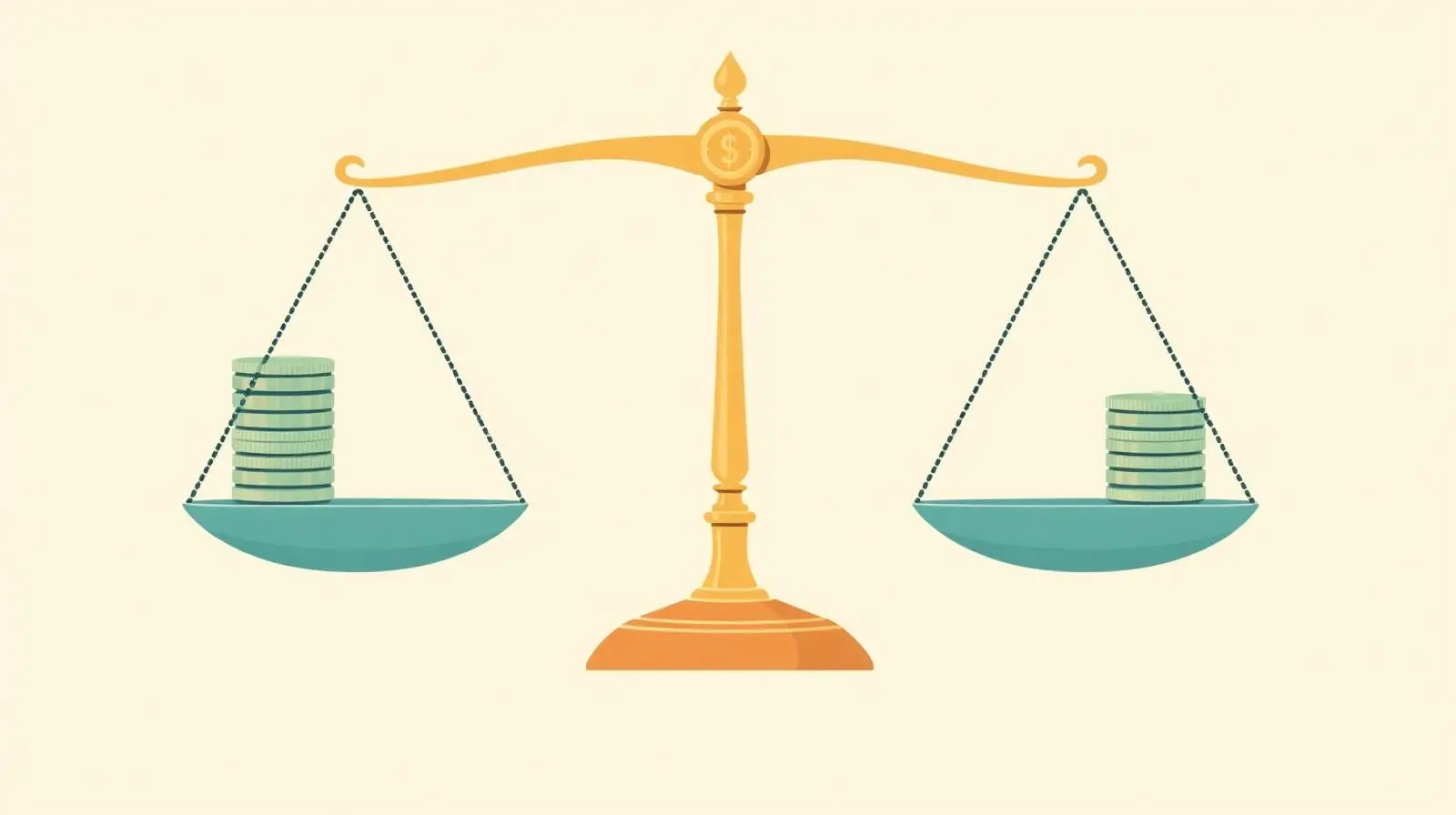
While California law requires a 50/50 split of community property, that does not mean you have to sell everything and split the cash. You just need to ensure the total net value each spouse receives is equal.
Most couples handle this through a Marital Settlement Agreement. For example, if you own a house with $100,000 in equity and a 401(k) worth $100,000, one spouse might keep the house and the other might keep the 401(k). The split is 50/50, even though the specific assets were not divided.
If you and your spouse can agree on how to divide your assets, you can draft your own agreement, attach it to your divorce paperwork, and never step foot in a courtroom. Start your California divorce packet and we'll prepare the property-division paperwork that matches your agreement.
Frequently asked questions
Is California a 50/50 state for divorce?
Does it matter whose name is on the title of the house?
What happens to debt in a California divorce?
DivorceFastCA provides self-directed document preparation services at your specific direction. We are not a law firm and cannot provide legal advice. If you have complex assets, business interests, or a contested custody dispute, consult a licensed California family law attorney.