Process & Eligibility
How to File for Divorce in California: A Step-by-Step Guide
Quick answer
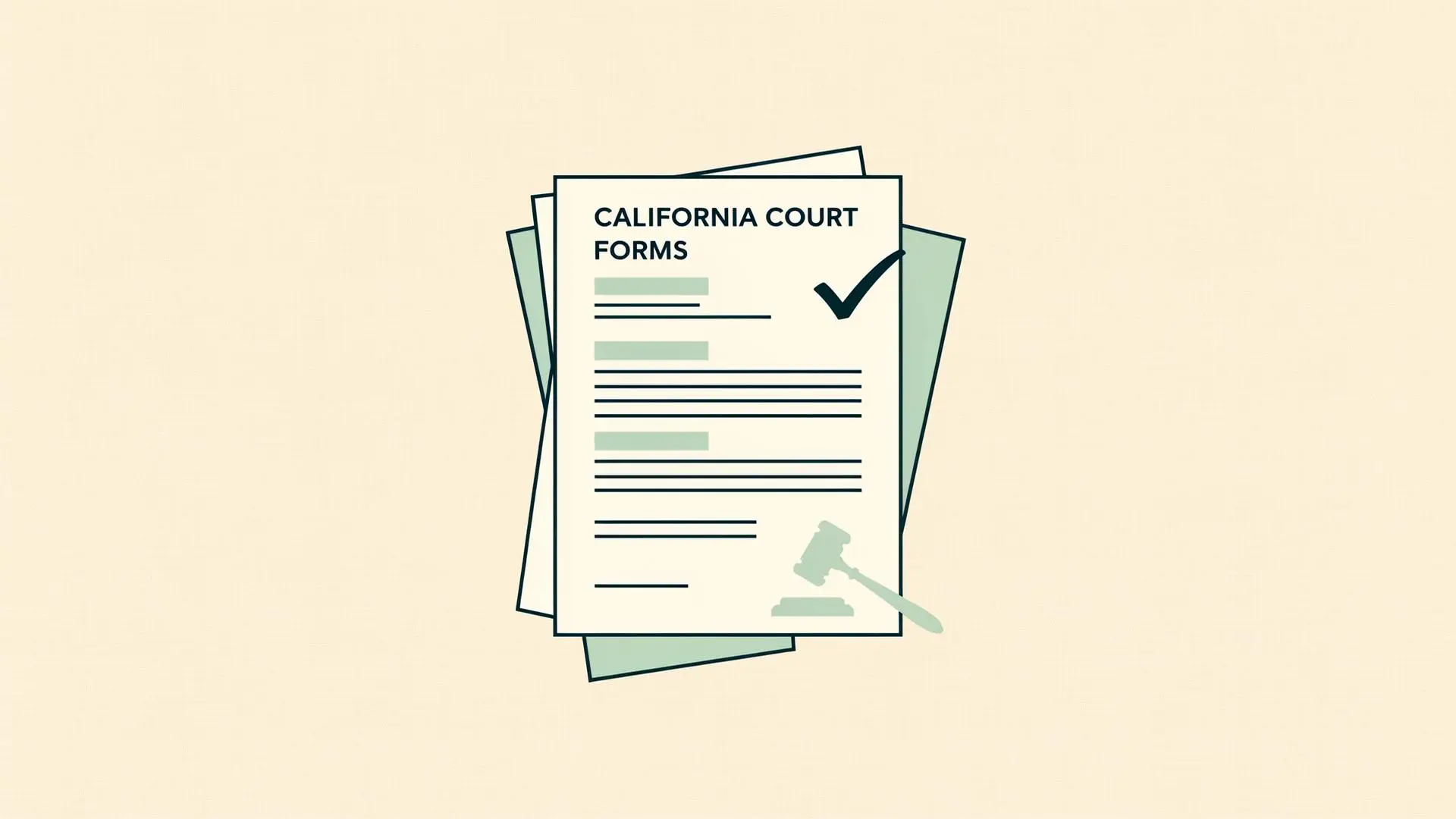
To file for divorce in California, you must meet the 6-month state residency requirement. The process involves four steps: filing the initial petition (Form FL-100), serving your spouse, exchanging financial disclosures (Form FL-140), and submitting your final judgment (Form FL-180). The filing fee is $435, and the process takes a minimum of six months to finalize.
Filing for divorce in California feels overwhelming when you look at the stack of forms required by the court. But the process itself follows a predictable, logical path. You do not necessarily need an attorney to navigate it, especially if you and your spouse agree on the terms.
Here is the exact step-by-step process for filing a traditional divorce in California, based on the requirements set by the California Family Code. If you want to skip the research and see which pathway fits your situation, our 1-minute eligibility quiz maps you to the right forms.
Step 1: Confirm Your Eligibility
Before you fill out a single form, verify that you meet California's residency requirements. Under California Family Code §2320, you or your spouse must have lived in:
- California for at least six months immediately before filing.
- The county where you plan to file for at least three months immediately before filing.
If you do not meet these requirements, you cannot file for divorce yet. You can, however, file for a legal separation and amend it to a divorce later once the time requirement is met.
Step 2: Prepare and File the Initial Forms
To start the divorce, the person filing (the "Petitioner") must complete and submit the initial paperwork to the Superior Court in their county.
The essential forms include:
- FL-100 (Petition for Dissolution): Tells the court you want a divorce and outlines what you are asking for regarding property, children, and support.
- FL-110 (Summons): Contains standard restraining orders that apply to both spouses immediately, preventing either of you from selling property, moving children out of state, or canceling insurance policies.
You will file these forms at the courthouse and pay the statewide filing fee of $435. If you cannot afford the fee, you can submit Form FW-001 to request a fee waiver based on your income.
Step 3: Serve Your Spouse
California law requires that your spouse (the "Respondent") be officially notified of the divorce. You cannot serve your spouse yourself.
Someone who is at least 18 years old and not involved in your case must hand-deliver copies of the filed FL-100 and FL-110 to your spouse. This person can be a friend, a family member, or a professional process server.
Once the papers are delivered, the server must complete Form FL-115 (Proof of Service of Summons), which you then file with the court. The mandatory 6-month waiting period begins on the exact date your spouse is served.
Step 4: Exchange Financial Disclosures
California requires complete financial disclosures during a divorce. Within 60 days of filing your petition, you must share your financial information with your spouse. This is called the "Preliminary Declaration of Disclosure."
You will need to complete:
- FL-140: Declaration of Disclosure
- FL-150: Income and Expense Declaration
- FL-160: Property Declaration (or a detailed spreadsheet of assets and debts)
You do not file these financial documents with the court. You only file a one-page form (FL-141) proving that you sent them to your spouse. If you skip this step, the court will reject your final divorce judgment.
Step 5: Finalize the Judgment
How you finish the process depends on how your spouse responds.
If your spouse does not respond within 30 days, you can request a "default" judgment and finalize the divorce without a lawyer or further participation from them.
If you and your spouse agree on all terms—how to divide community property, child custody, and support—you will draft a Marital Settlement Agreement. You both sign this agreement and submit it to the court along with your final judgment forms (primarily Form FL-180).
A judge will review your paperwork. If everything is in order, the judge signs the Judgment, and your divorce becomes final after the 6-month waiting period has passed — how long the process takes depends on your situation and county.
Ready to begin? Start your California divorce packet and we'll prepare court-ready forms for your specific pathway.
Frequently asked questions
Do I have to go to court to get divorced in California?
What happens if my spouse refuses to sign the divorce papers?
How much does a divorce cost in California?
DivorceFastCA provides self-directed document preparation services at your specific direction. We are not a law firm and cannot provide legal advice. If you have complex assets, business interests, or a contested custody dispute, consult a licensed California family law attorney.